Sale
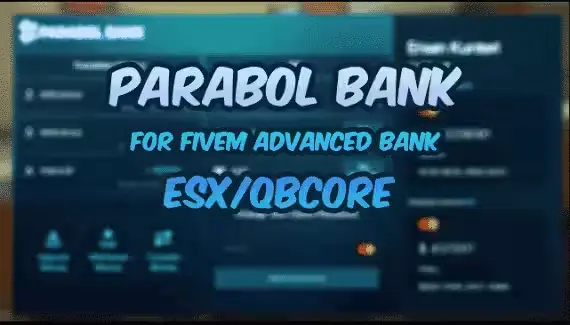
[ESX/QB] Parabol Bank V2
$9.00 $5.00
ESX scripts written against es_extended: jobs, shops, garages, drug chains, HUDs and the framework builds that sit under them. Most of it arrives as a single download carrying an ESX config path alongside the others, because that is how creators serve a scene split across frameworks. The badge matters: it tells you the author ran that path rather than assuming it would hold.
The part of this shelf worth reading slowly is the work that carries no other framework at all. Those were built for es_extended by people who run es_extended, reaching for its player object and callbacks directly instead of routing through an adapter. They cluster around jobs and the economies attached to them, which is where ESX servers have always been strongest.
Most listings sit between $10 and $20 with the entry point at $5, a good share of the shelf costs nothing, and every card states the frameworks its creator actually tested.
Nearly every resource in this catalogue ships as a single download that serves several frameworks, and the ESX badge means the creator wrote and tested an es_extended path through it. In practice that is a config flag and a set of adapter files: the same job logic, wired to the ESX player object and ESX callbacks instead of the qb equivalents. Hence the overlap. This shelf and the QBCore shelf share most of their contents, because a single download gets listed twice under two different framework names. One download, several config blocks, and the badge tells you which of those blocks the author actually ran.
Take the badge at its word. The failure mode when a creator guesses is quiet, and quiet failures are the expensive kind on a server with people on it. A resource that was ported rather than written for ESX tends to work until the moment it touches something framework-specific: a society account, a job grade check, a licence lookup. Everything looks fine on an empty test server and breaks on a Friday night with a full city. The checklist in how to vet a FiveM script covers what to read before that happens.
Look at what carries no other framework. That block is the most interesting part of the page, and it is the reason this shelf rewards reading rather than filtering. Those were built for es_extended by people who run es_extended, and they reach for its player object and its callbacks directly rather than routing through a compatibility layer.
They cluster where ESX servers have always been strongest: jobs and the economies around them. Multi-job systems, trucking, mining and poster runs, the shop and robbery loops, character creators, garages and complete framework builds. Some of them are free. Came for jobs? The FiveM jobs shelf crosses every framework and is the better place to browse that specific need.
There is a mirror image. Knowing about it before you shop saves you from buying something that will never run on your server at all. A substantial block of this catalogue supports the qb lineage and nothing else, mostly resources named after the qb-core resource they replace. Those will not run on es_extended without somebody rewriting them. No config flag changes that. The ESX to QBCore migration tutorial explains the shape of that work in the other direction, and the effort is symmetrical.
Both frameworks solve the same problems and disagree about the details, and the disagreements are where scripts break.
Inventory is the big one. ESX servers have historically run a wider spread of inventory resources than qb servers do, and a script that assumes one particular inventory export will fail against the others. Read the dependency list before you buy. Then read your own server, because a mismatch here only becomes visible once a shop has registered against an inventory that is not there. If the listing names an inventory you are not running, you are signing up for the adapter work yourself.
Money is the second. ESX splits cash, bank and black money into separate accounts, and society funds sit apart from all of them. A payout written for a framework that models money differently will either land in the wrong account or silently do nothing. Job grades are the third: ESX grades are numeric and named per job, and a permission check written against a different grade model tends to pass for everyone or nobody.
None of this makes ESX the harder framework to build on, and the servers that run it have been running it for years without much difficulty. It makes framework claims worth checking. Different thing.
Start with the manifest. FiveM fxmanifest.lua explained is the long version, but the short one is that the manifest names the dependencies and the load order, and a resource whose manifest disagrees with its store page is telling you something about how carefully it was maintained.
Then read the config. Editing FiveM script configs safely covers what you can change without breaking the next update, and a config you cannot understand from reading it is a config you will be afraid to touch a year into running it. Whether the source is readable at all depends on escrow, and escrow versus open source is worth reading once before you spend anything, because it decides what you can fix yourself.
Then watch the weight. Anything that runs every frame deserves a look at resmon before it stays on a live server, and a HUD is the usual offender. The notes on server FPS and running several heavy scripts at once explain what a bad number looks like, and threads and wait loops explains where it usually comes from.
When something goes wrong it is usually familiar. Most of it is the same handful of errors, and common FiveM script errors and Lua error handling between them cover the stack traces you will actually see.
Paid work on this shelf starts at $5 and most of it sits between $10 and $20, which makes the cost of a mistake small and the cost of a habit large. Server owners who end up with a bloated build almost always got there one reasonable purchase at a time.
Test the idea before you pay for it. Free FiveM scripts includes plenty of ESX-badged work, and running a free version of a fishing loop or a chop shop for a fortnight tells you whether your players will touch it. If they will not, you have lost an evening. If they will, buy the good one.
Where a creator sells a set of resources meant to run together, the bundles cost less than assembling the same set piece by piece. If you are starting from nothing rather than filling gaps, the ready-made servers are complete builds with the wiring done. Everything else is indexed on the category list.
The scripts that cause the most trouble are rarely the badly written ones. They are the ones that were edited in place and then updated, which is a different failure and a far more common one. A creator ships a fix, you drop the new files over your customised config, and your changes go with them. Updating paid FiveM scripts safely covers how to avoid that, and it matters more on ESX than most people expect, because the framework's age means a lot of ESX servers are running resources that have been patched by hand for years.
Keep your secrets out of the files. FiveM convars and secrets management covers the API keys and webhook URLs that end up committed to a repository or pasted into a support channel, and protecting a server from exploits covers the rest of what sits around a resource you did not write.
It means the creator wrote and tested an es_extended path through it. Most resources here ship as one download with a config block for each framework they support, so the badge tells you which of those blocks the author actually ran. A smaller group of listings carries no other framework at all, and those were built for ESX from the start.
Only where the listing says so, and most of them do say so. Where a resource carries an ESX badge alone, moving it means rewriting the parts that touch the player object, job grades and society accounts. That is real work rather than a config change, so take the badges at face value in both directions.
Your inventory resource, more often than the framework itself. Item metadata, stashes and shop registration all go through it, and a script written for an inventory you are not running will start without complaining and then quietly do nothing. Read the dependency list on the listing, then check it against your own server before you buy.
That depends on whether the creator escrowed the resource, and the listing says which. An open resource can be adapted to your build by anyone who reads Lua. An escrowed one cannot, so a small incompatibility becomes a support request instead of an afternoon. It is worth deciding which you are comfortable with before you shop rather than after.
The download is emailed to you as soon as the payment settles, so nothing waits on a person approving it. Keep the email: updates from the creator come through the same link, and dropping a new version straight over a config you have customised is the usual way a working server stops working.